Adding a Luxurious Spark: Understanding the Allure of the Baby Doll Font
In the vast universe of typography, fonts are more than just letters on a screen; they are the voice of a design. They convey mood, establish brand identity, and guide the viewer’s emotional response. While sans-serifs speak of modern efficiency and serifs whisper tradition, handwritten fonts tell a story of intimacy and personality. Among these, the Baby Doll font stands out as a distinctively romantic and sweet typeface, designed to infuse a sense of elegance and playfulness into any creative endeavor.
For designers, crafters, and business owners, choosing the right typeface is a critical decision. The Baby Doll font is not merely a collection of characters; it is a carefully crafted tool designed to dance along the baseline of your text. This article explores the characteristics, technical features, and practical applications of this unique font, offering a comprehensive guide for anyone looking to add a luxurious spark to their work.
The Essence of Baby Doll: A Dance on the Baseline
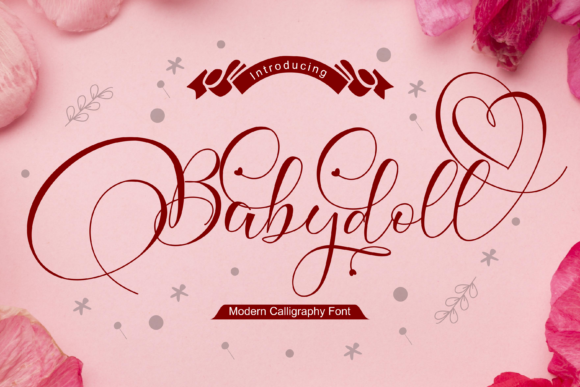
To understand the Baby Doll font, one must first appreciate its aesthetic philosophy. It is classified as a romantic and sweet handwritten font. Unlike rigid geometric typefaces, Baby Doll mimics the organic flow of human handwriting, specifically the kind associated with calligraphy and romantic stationery.
The defining characteristic of this font is its movement. The description that the characters "seem to dance along the baseline" is a precise technical observation. In typography, the baseline is the invisible line upon which letters sit. Most fonts sit firmly on this line. However, Baby Doll features a bouncing baseline. The letters vary in height and vertical positioning, creating a rhythm that feels alive and energetic. This irregularity is intentional; it breaks the monotony of standard text and draws the eye in a gentle, undulating path.
Visual Elements and Alternates
Beyond the bouncing baseline, the font is rich with alternates. In typography, an alternate is a different version of a standard letter. For example, the letter "a" might have a standard version, but also a more flourished version with an extra loop or a longer tail. The Baby Doll font includes these variations to ensure that when you type, the letters connect naturally, avoiding repetitive loops that can make handwriting fonts look artificial.
The "sweetness" of the font comes from its soft edges and fluid connections. It avoids sharp angles, opting instead for curves that mimic the pressure changes of a brush or pen nib. This makes it inherently friendly and approachable, perfect for designs that aim to evoke warmth, nostalgia, or affection.
Demystifying PUA Encoding: Unlocking the Full Potential
One of the most technical yet significant aspects of the Baby Doll font is that it is PUA encoded. For the average user, this term might seem obscure, but it is the key to unlocking the font's full capabilities.
What is PUA Encoding?
PUA stands for Private Use Areas. In the Unicode Standard (the system that assigns a number to every character in every language), there is a specific block of code points set aside for private use. These codes are not assigned to standard characters like "A" or "B" or standard punctuation.
When a font designer creates complex swashes, ligatures (special connecting characters), and alternates, they often run out of space in the standard character slots. To solve this, they place these extra design elements in the PUA. Therefore, a font that is "PUA encoded" means that all those beautiful extra glyphs are stored in a way that they can be easily accessed, even by software that does not natively support advanced OpenType features.
Why This Matters for Your Workflow
For the user, PUA encoding translates to ease of use. Without PUA encoding, accessing a specific swash or ligature might require complex software like Adobe Illustrator and a deep knowledge of the "Glyphs" panel. With a PUA encoded font like Baby Doll, you can often access these characters through standard programs, or by using a simple character map tool provided by your operating system.
This accessibility ensures that you can utilize the "amazing glyphs and ligatures" mentioned in the font's description without being a typography expert. It democratizes high-end design, allowing everyone to create text that looks custom-lettered.
Practical Applications: Where Baby Doll Shines
The versatility of the Baby Doll font allows it to fit into various aspects of modern life, business, and creativity. Its romantic nature makes it particularly suited for industries centered around lifestyle, beauty, and celebration.
1. Wedding Stationery and Event Invitations
Perhaps the most natural home for the Baby Doll font is in the world of weddings. The romantic and sweet aesthetic aligns perfectly with the sentiment of marriage. It is ideal for:
- Save the Dates: The dancing baseline creates a sense of excitement and joy.
- Invitations: It adds a luxurious, expensive feel to the typography, suggesting high-quality stationery.
- Place Cards and Menus: Using the alternates, you can ensure every guest's name looks unique and special.
2. Branding for Small Businesses
In the crowded marketplace of small businesses, branding is essential. The Baby Doll font helps businesses stand out by conveying a specific personality. It is particularly effective for:
- Bakeries and Sweet Shops: The "sweet" descriptor is literal here; the font looks good enough to eat.
- Boutique Clothing: It suggests femininity, elegance, and curated style.
- Beauty and Skincare: The luxurious spark of the font implies quality and pampering.
3. Social Media and Digital Content
In the age of Instagram and Pinterest, visual appeal drives engagement. Text overlays on images need to be legible yet stylish. Baby Doll works well for:
- Quotes: Inspirational or romantic quotes look more poignant in a handwritten style.
- Headers: Using it for headers in blog posts or newsletters adds a personal touch that standard web fonts lack.
4. Personal Projects and Scrapbooking
For digital scrapbookers and hobbyists, the ability to access all glyphs easily is a massive benefit. It allows for the creation of headers and captions that mimic the look of hand-lettering without the permanence of ink.
Avoiding Common Pitfalls in Handwritten Typography
While the Baby Doll font is a powerful tool, it is important to understand how to use it correctly to maintain readability and design integrity.
Legibility vs. Style
A common misunderstanding with decorative handwritten fonts is that they can be used for long paragraphs of text. This is rarely the case. Fonts like Baby Doll are designed for display use—meaning they are best used for headlines, logos, and short phrases.
If you use Baby Doll for a 12-point paragraph in a brochure, the eye will struggle to track the dancing baseline, leading to fatigue. Always pair a display font like Baby Doll with a clean, simple sans-serif or serif font for body text. This contrast actually highlights the beauty of the Baby Doll font even more.
Context is King
Another assumption is that a "pretty" font fits everywhere. However, the romantic nature of Baby Doll might not be appropriate for a corporate law firm or a heavy machinery manufacturer. The font carries a specific emotional weight—sweetness, romance, luxury. Using it in the wrong context can create a dissonance between the message and the medium. Always ensure the font’s personality matches the brand’s voice.
Technical Tips for Using Alternates and Ligatures
To truly harness the power of the Baby Doll font, you should aim to use its advanced features. Here is a brief guide on how to approach this:
- Check Your Software: Professional design software like Adobe Photoshop, Illustrator, or InDesign has a "Glyphs" panel. This allows you to see every character available in the font, including the PUA-encoded swashes.
- Use a Character Map: If you are using standard software like Microsoft Word or Canva, you can use the Character Map (Windows) or Font Book (Mac) to copy specific alternate characters and paste them into your design.
- Experiment with Connections: Look for "end-of-word" swashes. These are flourishes attached to the last letter of a word. They add a finishing touch that makes the text look professionally lettered.
Conclusion: The Luxury of Details
The Baby Doll font is more than just a typeface; it is a design asset that bridges the gap between digital precision and human warmth. Its romantic and sweet style, combined with the technical advantage of PUA encoding, makes it a versatile choice for modern creators.
Whether you are designing a wedding invitation for a client, branding a new boutique, or simply creating a beautiful graphic for your social media feed, Baby Doll offers a way to add a "luxurious spark" to your work. By understanding its dancing baseline and utilizing its extensive library of glyphs, you can transform standard text into a visual experience that captivates and delights.
In a world increasingly dominated by sterile, automated interfaces, fonts like Baby Doll remind us of the beauty of the human touch. It encourages us to slow down, appreciate the curves of the letters, and enjoy the creative process.