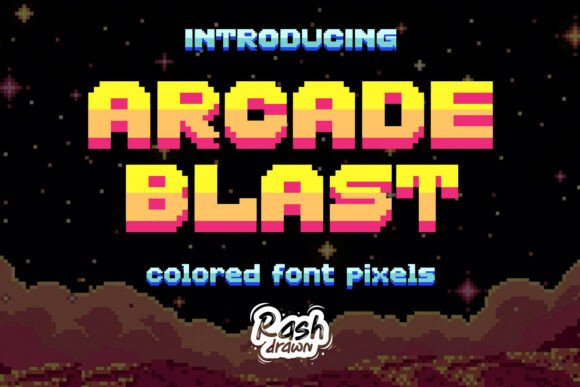
Arcade Blast: Evaluating the Retro Pixel Color Font for Modern Design Projects
When searching for typography that captures the 80s and 90s arcade aesthetic, designers often face a choice between standard vector fonts and more complex asset packages. Arcade Blast positions itself as a distinct option in this niche, specifically as a high-quality OpenType-SVG Color Font. Unlike traditional single-color typefaces, it arrives with built-in vibrant gradients and a pixel-perfect structure, aiming to deliver an authentic retro look without additional manual coloring. This article examines its features, practical applications, and how it compares to other approaches for achieving a similar visual style.
Understanding the Core Technology: OpenType-SVG Color Fonts
The defining characteristic of Arcade Blast is its format. It is an OpenType-SVG font, which means each glyph contains embedded SVG data, allowing for multi-color and gradient fills directly within the font file. This technology differs fundamentally from standard outline fonts (like .OTF or .TTF) where color must be applied separately in your design software. The primary benefit is immediate visual impact—you type, and the pre-set retro gradients appear. This can significantly speed up workflows for projects where this specific, vibrant aesthetic is desired.
However, this technology comes with compatibility considerations. The article's technical notes are crucial: Arcade Blast requires relatively recent versions of major design software. It functions fully in Adobe Illustrator CC 2018+, Photoshop CC 2017+, and InDesign CC 2019+, as well as Canva for font uploads and standard macOS applications. For designers using older software, or those working with specialized tools like vinyl cutters (Cricut, Silhouette), the OpenType-SVG file will not render correctly. In such cases, the included EPS vector files become the necessary alternative, requiring manual color application but offering broader compatibility.
Practical Applications and Ideal Use Cases
Arcade Blast is engineered for specific visual contexts. Its strength lies in projects where a bold, nostalgic, and colorful pixel font is the central design element. Realistic examples include:
- Game Branding & UI: Creating titles, logos, or menu text for indie games, mobile apps, or retro-themed interfaces.
- Streamer & Content Creator Assets: Designing YouTube thumbnails, channel banners, overlays, or social media graphics that need an energetic, gaming-inspired vibe.
- Apparel & Merchandise: Developing graphics for streetwear, t-shirts, or posters where the retro pixel style is a key selling point.
- Event Marketing: Crafting posters, flyers, or digital ads for themed parties, gaming tournaments, or retro events.
In these scenarios, the font's built-in gradients are a clear advantage, eliminating the step of creating and applying complex color fills to each letterform. The comprehensive character set, including accented characters, also makes it suitable for international projects within these niches.
Comparing Approaches: Arcade Blast vs. Alternative Methods
When evaluating Arcade Blast, it's helpful to consider the alternative paths to a similar result. Each has distinct tradeoffs regarding flexibility, ease of use, and final output.
1. Standard Pixel Fonts + Manual Coloring: Using a traditional, single-color pixel font is the most common alternative. This offers maximum compatibility with all software and cutting machines. However, achieving the vibrant gradient effect seen in Arcade Blast requires significant manual work: outlining the text, applying gradient fills, and adjusting each letter or group individually. This approach is highly flexible but time-consuming.
2. Pre-Made Text Effects or Brushes: Some designers use graphic styles or brushes that apply a retro color effect to any font. This can be quick but may lack the precision and integrated design of a purpose-built color font. The result can sometimes look less authentic or require further tweaking to achieve the desired pixel-perfect alignment.
3. Custom Vector Illustrations: For one-off logos or titles, designers might create the text entirely as vector artwork. This provides ultimate control over every pixel and color but is impractical for projects requiring editable, typeset text (like a poster with changing information).
Arcade Blast occupies a middle ground. It offers a ready-made, authentic aesthetic with significant time savings for compatible software users. The tradeoff is reduced flexibility—the color gradients are pre-set and cannot be altered within the font file itself (only via the included EPS vectors). It is a specialized tool rather than a general-purpose typeface.
Decision Factors: Is Arcade Blast the Right Choice?
Choosing this font depends on aligning your project needs with its capabilities and limitations.
Consider Arcade Blast if:
- Your primary design environment is a supported version of Adobe CC, Canva, or macOS apps.
- You value speed and want an "instant" retro color effect without manual gradient work.
- Your project's visual identity is centered on a vibrant, 80s/90s arcade aesthetic.
- You need a complete character set for typesetting headlines or short text blocks.
You may need another option if:
- You work in older design software, use a PC without access to the listed CC versions, or rely on Cricut Design Space.
- You require full control over color palettes or need to match specific brand colors exactly.
- Your project demands a more subtle or versatile retro style, or you need a font for body text.
- Budget is a primary concern, and a free or lower-cost standard pixel font would suffice for your needs.
For those whose software is compatible and whose aesthetic goals align, Arcade Blast presents a compelling, integrated solution. The inclusion of editable EPS vectors is a prudent fallback, ensuring the design assets remain usable across a wider range of tools, albeit with some loss of the "instant color" convenience. Ultimately, it is a resource best evaluated based on your specific workflow, software ecosystem, and the precise visual outcome you aim to achieve.