Corei: A Comprehensive Guide to the Decorative Display Typeface
In the vast landscape of digital typography, choosing the right typeface is a critical decision that influences the tone, readability, and perceived quality of a design project. While serif and sans-serif fonts dominate body text due to their legibility, display typefaces play a different role. They are designed to capture attention, convey a specific mood, and establish a visual hierarchy. Corei is one such decorative display font, characterized by its distinct artistic elements and strong character. This article provides a detailed evaluation of Corei, exploring its features, ideal use cases, and the technical considerations necessary for potential users.
Understanding the Corei Typeface
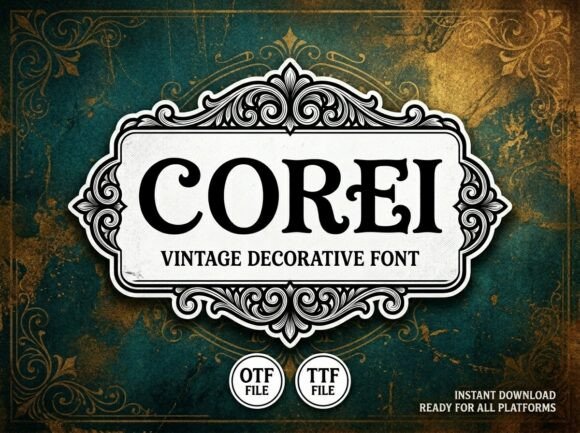
Corei is best described as a decorative display typeface intended to serve as the visual centerpiece of a layout. Unlike utilitarian fonts designed for long-form reading, Corei prioritizes aesthetic impact and personality. Its design philosophy focuses on breaking away from the ordinary, offering creators a tool that delivers a high-end, professional aesthetic. The font features strong character shapes and artistic details, making it a specialized tool rather than a general-purpose font. It is designed for creators who need typography that stands out, such as graphic designers, brand strategists, and packaging artists.
Key Features and Technical Specifications
When evaluating a font like Corei, it is essential to understand its technical composition and how it integrates into various workflows. The typeface is distributed in two standard formats to ensure broad compatibility.
- OTF File (OpenType Font): This format is ideal for professional design software such as Adobe Illustrator, Photoshop, and InDesign. OTF files often support advanced typographic features, though for a display font like Corei, the primary advantage is the rendering quality and compatibility with vector-based workflows.
- TTF File (TrueType Font): This format ensures seamless performance across various operating systems, including Windows and macOS. It is a versatile format that works well in both design software and standard office applications.
A critical technical characteristic of Corei is its classification as an all-caps display typeface. By design, the font does not contain lowercase letters. This is a deliberate stylistic choice intended to maximize visual impact. The uniform height of the uppercase letters creates a strong, blocky aesthetic that is particularly effective for logos, titles, and decorative initials. Users should be aware that attempting to type in lowercase will result in the text rendering in uppercase characters.
Evaluating the Benefits: Why Choose Corei?
The primary benefit of using Corei lies in its ability to immediately elevate the perceived quality of a design. For projects that require a bold, contemporary, or artistic look, Corei provides a ready-made solution. Its strong character allows it to function as a focal point, reducing the need for excessive graphic elements to fill a layout. This can lead to cleaner, more impactful designs. Furthermore, the high-end aesthetic of the font can help brands position themselves in a premium market segment, particularly in industries like fashion, cosmetics, and luxury goods where visual presentation is paramount.
Tradeoffs and Considerations
While Corei offers significant visual appeal, its specialized nature presents certain tradeoffs that must be considered during the decision-making process.
- Readability vs. Impact: As a decorative display font, Corei is optimized for short bursts of text—headlines, logos, and titles. Its artistic elements, while visually striking, can reduce legibility at smaller sizes or when used for longer sentences. It is not a suitable choice for body copy, paragraphs, or any context where extended reading is required.
- The All-Caps Limitation: The absence of lowercase letters is a fundamental constraint. While this creates a powerful, uniform look, it eliminates the typographic variation that can aid in readability and convey a more nuanced tone. For projects that require a mix of cases for hierarchy or softer messaging, Corei would need to be paired with a complementary body font that does have a full character set.
- Design Context: The bold, decorative nature of Corei means it will dominate a design. It requires a thoughtful layout to avoid appearing cluttered or overwhelming. Simplicity in surrounding elements is often key to letting a font like Corei shine. If a project’s visual language is already complex, introducing a highly stylized typeface might create visual noise rather than focus.
Ideal Use Cases for Corei
Corei is a strong fit for specific creative scenarios where its strengths are maximized.
- Branding and Logo Design: For startups or established brands looking to convey creativity, modernity, or luxury, Corei can form the foundation of a distinctive wordmark or logo.
- Packaging Design: In consumer goods, packaging is a critical touchpoint. Corei’s high-end aesthetic is well-suited for product labels, boxes, and tags, particularly for artisanal or premium products.
- Editorial and Magazine Layouts: The font can be used effectively for article titles, pull quotes, and section headers in magazines, blogs, or digital publications to create a dynamic and engaging visual rhythm.
- Event Branding: For invitations, posters, and promotional materials for events like gallery openings, product launches, or creative conferences, Corei can set a sophisticated and artistic tone.
- Social Media Graphics: Bold, all-caps typography is highly effective on platforms like Instagram and Pinterest, where visuals must capture attention quickly. Corei can be used for impactful quotes, announcements, or title cards.
When to Consider Alternatives
There are situations where other typefaces would be more appropriate than Corei. If the primary goal is extensive readability for reports, articles, or user interfaces, a clean sans-serif or serif font is a better choice. For projects requiring a formal, traditional, or understated tone, a decorative display font may feel out of place. Additionally, if a design relies on nuanced typographic hierarchy using mixed cases, a font family with multiple weights and a full character set would offer more flexibility. Budget and licensing are also practical considerations; some projects may require open-source or bundled fonts that come at no additional cost.
Making the Decision: Does Corei Align with Your Goals?
To determine if Corei is the right font for your project, consider the following questions:
- What is the primary purpose of the text? If it is for headlines, logos, or short decorative elements, Corei is a viable candidate. If it is for body text, it is not.
- What is the desired brand or project aesthetic? If the goal is to appear bold, artistic, modern, or premium, Corei’s character aligns well. If the tone is more conservative, corporate, or minimalist in a subtle way, a different typeface may be better.
- What are the technical requirements? Ensure your design software and workflow are compatible with OTF/TTF files. Confirm that the all-caps limitation is acceptable for your layout needs.
- How will it pair with other fonts? A successful design often uses Corei in combination with a simpler, highly legible font for body text. Consider if you have a suitable pairing in mind.
In conclusion, Corei is a specialized tool in a designer's toolkit. It is not a universal solution but excels in its niche. By carefully evaluating your project’s goals, audience, and technical needs, you can determine whether its distinct artistic elements and strong character will effectively serve your creative vision or if a more conventional alternative is required. Its value lies in its ability to make a definitive statement, and it is best employed where that statement is desired.