The Sweetest Touch: How Sweets Doodle Enhances Modern Creative Projects
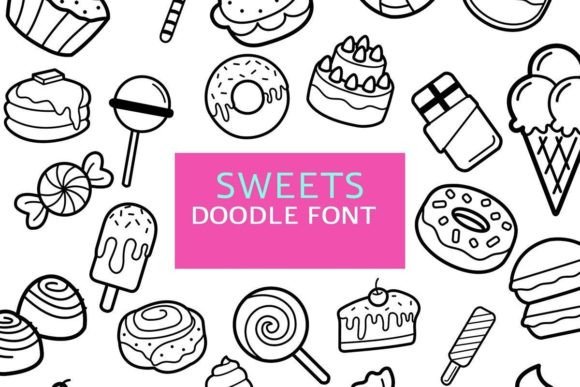
In the realm of digital design and crafting, the smallest details often create the most significant impact. While typography typically focuses on legibility and structure, there is a specialized category of fonts designed purely for visual delight and thematic reinforcement. This is where dingbat fonts shine, specifically those like Sweets Doodle. Far more than just a collection of characters, this typeface serves as a toolkit for adding personality, whimsy, and a distinct aesthetic to a variety of creative outputs. Whether you are a seasoned graphic designer, a hobbyist planner, or an entrepreneur looking to brand your packaging, understanding how to utilize assets like Sweets Doodle can transform your work from standard to standout.
Understanding the Appeal of Dingbat Fonts
Before diving into the specific applications of Sweets Doodle, it is helpful to understand the mechanics and value of dingbat fonts. Traditionally, dingbats were typographic ornaments or symbols used to break up text or add visual flair. In the digital age, they have evolved into powerful design assets. Unlike standard image files (such as PNGs or JPGs), dingbat fonts are vector-based. This means they can be scaled to any size—from a tiny icon on a business card to a large graphic on a banner—without losing resolution or becoming pixelated.
The resurgence of interest in these fonts is closely tied to the rise of personalization. Modern consumers and creators crave unique, handmade aesthetics that stand out against the uniformity of corporate digital design. Sweets Doodle fits perfectly into this niche. As a fun and cute dingbat font, it offers a specific visual language: playful, approachable, and energetic. It taps into a design trend that values "imperfect" artistry—the look of a hand-drawn sketch—while maintaining the precision and ease of use required by modern digital workflows.
The Versatility of Sweets Doodle in Modern Workflows
One of the most compelling aspects of Sweets Doodle is its adaptability. It is not limited to a single medium or industry. Instead, its versatility makes it a valuable asset across a wide spectrum of projects. This adaptability is crucial in today’s fast-paced creative environment, where assets often need to perform double duty across social media, print, and physical products.
Transforming Planners and Diaries
The "planner community" has exploded in recent years, driven by a desire for mindfulness, organization, and self-expression. For millions of adults, a planner is not just a scheduling tool; it is a creative outlet. Sweets Doodle is particularly well-suited for this audience. When used in planner stickers or digital inserts, it provides a cohesive visual theme that is both cheerful and functional.
- Visual Coding: Users can assign specific doodle symbols to different types of appointments or moods, making organization intuitive and visually engaging.
- Aesthetic Consistency: Because the font comes from a single family, it ensures that all elements—icons, headers, and decorative borders—share a unified line weight and style.
- Digital and Print Hybridity: Many modern planners are "printable" PDFs or digital templates for apps like GoodNotes. Vector-based dingbats ensure these elements look crisp on both paper and screen.
Elevating Craft Projects and DIY Designs
For hobbyists and small business owners in the handmade sector, Sweets Doodle offers a way to professionalize their creations without needing advanced illustration skills. Crafting has moved beyond scrapbooking; it now encompasses custom apparel, home décor, and stationery. Using a specialized dingbat font allows creators to generate high-quality graphics instantly.
Consider the production of custom gift wrap or greeting cards. By repeating a pattern of characters from the Sweets Doodle font, a creator can design a seamless, whimsical background. This approach is cost-effective and allows for rapid prototyping. If a design doesn't look right, changing the layout is as simple as editing text, rather than redrawing an image.
Engaging Educational and Activity Content
In the education sector, engagement is key. Whether creating materials for young learners or designing interactive content for corporate training, visual aids significantly improve retention. Sweets Doodle is an excellent resource for activity books and educational worksheets. Its "cute" aesthetic reduces the intimidation factor often associated with learning new concepts.
Educators and content creators can use these symbols to create matching games, mazes, or "find-the-difference" puzzles. Because the icons are stylistically consistent, they help maintain a clean, organized look on the page, which is essential for reducing cognitive overload in learners.
Aligning with Current Design Trends
Design trends are cyclical, but the current preference leans heavily toward human-centric and nostalgic visuals. The "doodle" aesthetic—characterized by imperfect lines, playful shapes, and a sense of spontaneity—has become a dominant force in branding and user interface design. This style conveys authenticity and approachability, qualities that consumers increasingly seek out.
Sweets Doodle aligns perfectly with this shift. In an era dominated by sterile minimalism and AI-generated perfection, hand-drawn elements provide a refreshing counterpoint. They signal that a brand or project has a human touch. For entrepreneurs, utilizing this font style can make a brand feel more accessible and friendly, bridging the gap between the business and the customer.
Furthermore, the "kawaii" (cute) influence, which originated in Japanese pop culture, has become a global phenomenon. It is no longer reserved for children; it is a legitimate design language used in tech, fashion, and marketing to evoke positive emotions. Sweets Doodle taps into this aesthetic, offering symbols that are universally understood as cheerful and non-threatening.
Practical Implications for Professionals and Entrepreneurs
For professionals, the integration of assets like Sweets Doodle goes beyond mere decoration. It is a strategic decision regarding brand identity and user experience. Here is how different professionals can leverage this tool effectively:
- Brand Identity: Small businesses, particularly those in the food, lifestyle, or children’s sectors, can use doodle fonts to create a distinct brand personality. It helps differentiate them from competitors using standard corporate fonts.
- Social Media Engagement: Visual clutter is a major challenge on social platforms. Using cohesive doodle elements can help organize information in infographics or Stories, making content more digestible and shareable.
- Product Packaging: For physical goods, packaging is the first point of contact. A whimsical font can enhance the "unboxing experience," making the product feel more premium and thoughtful.
However, it is important to use such fonts judiciously. Overuse can lead to visual noise, diluting the message. The most effective approach is to use Sweets Doodle as an accent—a highlight to draw attention or a separator to organize content—rather than the primary vehicle for information.
Conclusion: The Enduring Value of Playful Typography
As we look toward the future of design and personal expression, the value of tools like Sweets Doodle remains clear. It bridges the gap between professional utility and personal joy. For the creator, it offers efficiency and quality; for the viewer, it offers delight and engagement.
Whether you are designing a digital diary, a set of planner stickers, or a new logo for a small business, the inclusion of a fun and cute dingbat font can fundamentally change the feel of your project. It serves as a reminder that design does not always have to be serious to be effective. In a world that often demands perfection and rigidity, Sweets Doodle invites us to embrace a little bit of whimsy, one character at a time.