Garcoff: A Gothic Blackletter Font for Bold, High-Impact Typography
Understanding Garcoff's Design Language
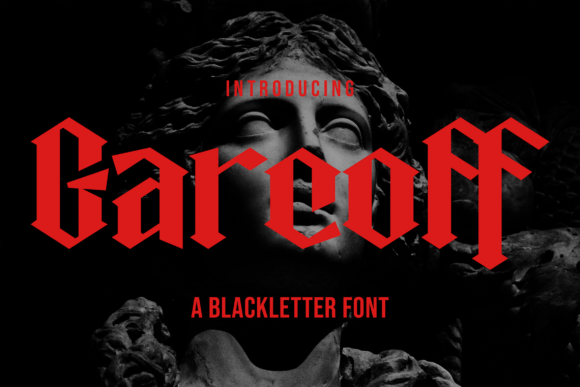
Garcoff is a gothic blackletter typeface that draws heavily from medieval manuscript traditions while applying a contemporary sharpness to its letterforms. Its defining characteristics include angular strokes, tall vertical proportions, and pronounced contrast between thick and thin elements. The font's pointed details and dramatic structure give it a distinctly historical quality, yet it maintains enough clarity to function effectively in modern display contexts.
Unlike more ornate blackletter styles that can become illegible at smaller sizes, Garcoff prioritizes visual impact through its geometric precision. The tall x-height and consistent stroke angles create a cohesive rhythm across words and phrases. This balance between historical reference and practical legibility is what makes Garcoff worth examining for designers working within specific aesthetic niches.
Key Characteristics That Define Garcoff
The font's angular construction is immediately apparent. Each letter features sharp terminals and deliberate corner points rather than rounded transitions. The vertical emphasis creates a sense of height and formality, while the high contrast strokes ensure visual weight even at reduced sizes. These elements combine to produce letterforms that feel both archaic and intentional.
Garcoff's character set typically includes uppercase and lowercase letters, numerals, and essential punctuation. The lowercase forms maintain the same angular aesthetic as their uppercase counterparts, ensuring consistency across mixed-case compositions. The spacing between characters is generally tight, which reinforces the condensed, upright appearance that blackletter fonts are known for.
Practical Applications and Project Suitability
Where Garcoff demonstrates the most value is in projects requiring historical or gothic atmosphere without sacrificing modern production standards. The font performs well across several specific use cases:
- Music industry graphics – Album covers, band logos, and concert posters for genres like metal, darkwave, or industrial music
- Tattoo design references – Script elements that clients can show artists as style guides
- Apparel and merchandise – T-shirt designs, patches, and branded clothing with dark or historical themes
- Editorial and publishing – Chapter headings, book covers, or magazine titles in horror, fantasy, or historical genres
- Branding and identity – Logos or wordmarks for businesses with gothic, medieval, or artisanal positioning
- Environmental graphics – Signage, event branding, or themed installations
The font's strength lies in short-form typography. It works best for headlines, titles, logos, and display compositions rather than extended body text. This is typical of blackletter designs, where readability at small sizes becomes challenging due to the intricate stroke details.
Evaluating Garcoff's Real-World Performance
From a practical standpoint, Garcoff handles the demands of modern design workflows reasonably well. The font renders cleanly at various sizes, maintaining its sharp angular details without excessive blurring or artifacting. At very small sizes, some of the finer pointed details may lose definition, but this is expected with any high-contrast display typeface.
The consistency across the character set is important for professional use. When letters maintain uniform proportions and stroke weights, designers can trust that words and phrases will look balanced. Garcoff appears to deliver this consistency, which reduces the time spent manually adjusting kerning or letter spacing in compositions.
For digital applications, the font's vector-based construction ensures scalability without quality loss. This makes it suitable for both screen-based projects and print production. The file formats typically available for such fonts—OTF and TTF—provide broad compatibility with design software including Adobe Creative Suite, Figma, and various web development environments.
Who Benefits Most from Using Garcoff
Garcoff serves a specific audience rather than general-purpose design needs. The professionals and creators who will find the most value include:
- Graphic designers working on dark-themed branding, music packaging, or editorial projects
- Tattoo artists and enthusiasts seeking reference material for blackletter script styles
- Apparel designers creating merchandise for niche markets with historical or gothic aesthetics
- Event producers developing branding for themed events, festivals, or immersive experiences
- Small business owners in industries like craft brewing, artisanal goods, or alternative fashion where historical typography reinforces brand identity
- Content creators and bloggers producing visual content for audiences interested in medieval history, fantasy, or dark aesthetics
The font is less suitable for corporate communications, technical documentation, or any context where neutral, highly legible typography is required. Its strong stylistic identity means it communicates a specific mood that may not align with all audiences or brand values.
Quality, Usability, and Long-Term Considerations
When evaluating a font like Garcoff for professional use, several factors matter beyond initial visual appeal. The technical quality of the font files, the breadth of the character set, and the licensing terms all influence long-term value.
A well-constructed blackletter font should include proper OpenType features where possible, such as ligatures or alternate characters that enhance typographic flexibility. While Garcoff's primary appeal is its standard character forms, additional features can provide designers with more creative options without requiring manual modifications.
The licensing model is another practical consideration. Fonts distributed for commercial use should have clear terms that cover intended applications—whether that includes print, digital, merchandise, or web embedding. Understanding these terms prevents legal complications down the line, particularly for businesses that plan to use the font across multiple projects or products.
Limitations and Honest Assessment
No typeface is universally appropriate, and Garcoff has clear boundaries. Its blackletter construction, while visually striking, limits its versatility. Projects requiring approachable, friendly, or contemporary aesthetics will find Garcoff misaligned with their goals. The font's historical associations can also create expectations—audiences may unconsciously connect it with specific genres, subcultures, or time periods, which could either support or undermine a project's intended message.
Readability at small sizes remains a constraint. While Garcoff handles display sizes well, attempting to use it for longer text passages, captions, or interface elements would likely frustrate users. Designers should pair it with a complementary sans-serif or serif font for body copy and secondary text elements.
Additionally, the gothic blackletter category is well-represented in font libraries, meaning Garcoff competes with numerous alternatives. Its value depends on how its specific proportions, angles, and details align with a designer's vision compared to other options in the same category.
Final Thoughts on Garcoff's Place in Design Work
Garcoff occupies a defined niche within display typography. For designers and creators working within gothic, historical, or dark-themed visual languages, it offers a reliable tool with strong aesthetic consistency. Its angular construction, tall proportions, and medieval inspiration make it suitable for music-related graphics, apparel, tattoo references, and branded materials that benefit from a bold historical presence.
The font's practical value lies in its ability to deliver immediate visual impact in short-form applications. When used within its intended scope—headlines, logos, titles, and display compositions—Garcoff performs effectively and maintains the quality standards expected in professional design work. However, its specialized nature means it should be selected deliberately, with clear understanding of the project's audience, goals, and aesthetic requirements.
For those whose work aligns with Garcoff's strengths, it represents a useful addition to a typographic toolkit. The key is matching its specific character to projects where that character enhances rather than limits the final outcome. When that alignment exists, Garcoff can contribute meaningfully to designs that need to communicate weight, history, and dramatic presence.