Sykenga: A Strategic Approach to Stencil Typography for Distinctive Design
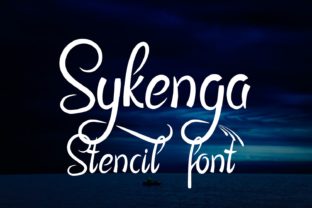
In the landscape of digital typography, where thousands of sans-serifs and serifs compete for attention, Sykenga stands apart not just as a font, but as a design decision. As a stencil font adorned with beautiful swashes, Sykenga offers more than mere legibility; it provides an immediate visual identity. However, the decision to integrate a typeface with such a distinct personality into a project should not be taken lightly. For entrepreneurs, marketers, and creators, using Sykenga effectively requires a shift from viewing typography as a passive container for text to seeing it as an active participant in your brand’s narrative. This article explores how to leverage Sykenga strategically, ensuring that its unique aesthetic serves your broader goals rather than simply decorating your layout.
The Strategic Value of Distinctive Typography
Typography is the voice of your design. While standard fonts like Arial or Helvetica act as a neutral tone, Sykenga speaks with a specific accent. Its stencil foundation implies structure, industrial strength, and a certain raw authenticity, while the added swashes introduce elegance, creativity, and fluidity. This duality is rare and valuable. For a business owner or decision-maker, choosing Sykenga is a strategic move to signal that your brand bridges the gap between the practical and the artistic.
When you apply Sykenga to a project, you are engaging in a form of visual positioning. In a crowded market, "safe" design often leads to invisibility. If your goal is to be remembered, the distinct look of Sykenga can be a powerful tool. It suggests that you pay attention to details and are willing to break away from the mundane. However, this distinctiveness comes with a responsibility to maintain clarity. The strategic use of Sykenga involves balancing its decorative flair with the need to communicate information efficiently.
Contextual Application: When to Deploy Sykenga
Understanding the context in which Sykenga thrives is essential for effective planning. Not every touchpoint in your customer experience requires a stencil font with swashes. Overuse can lead to visual fatigue or a cluttered aesthetic that undermines your message. The key is to use Sykenga intentionally, reserving it for moments where high impact is required.
High-Impact Branding Moments
Sykenga is exceptionally well-suited for hero sections, headers, and logos. These are the "handshake" moments of your design—where a first impression is formed. Using Sykenga for your main headline can immediately set a tone of sophisticated creativity. For example, a boutique marketing agency or a high-end architecture firm might use Sykenga to project an image of innovative precision. The stencil cut suggests a technical mastery, while the swashes hint at artistic vision.
Limited Edition and Special Campaigns
For marketers running seasonal promotions or launching limited-edition products, Sykenga offers a visual cue of exclusivity. Its ornamental nature makes it perfect for invitations, event posters, or packaging design where the goal is to create a sense of occasion. By using Sykenga for a specific campaign, you can differentiate that initiative from your standard communications, signaling to your audience that something unique is happening.
Editorial and Creative Projects
Bloggers and publishers can utilize Sykenga to break the monotony of long-form reading. While it is generally not recommended for body text due to its intricate details, using it for pull quotes, chapter titles, or magazine headers can inject personality into the reading experience. It adds a layer of editorial design that elevates the content, making it feel more curated and valuable.
Planning and Execution: Integrating Sykenga into Your Workflow
Adopting a new typeface like Sykenga requires more than just installation; it requires a plan for integration. To achieve the best results, consider the following practical steps to ensure the font enhances your productivity and design outcomes.
Pairing for Balance
The most critical decision you will make when using Sykenga is choosing its companion font. Because Sykenga has high visual complexity with its swashes and stencil breaks, it demands a clean, simple counterpart. A geometric sans-serif or a legible serif font works best to ground the design.
- The Rule of Contrast: Pair Sykenga with a font that has a neutral personality. If Sykenga is the "shout," the body text should be the "conversation." This ensures that the design remains readable and professional.
- Hierarchy Establishment: Use Sykenga exclusively for top-level hierarchy (H1, H2) and sparingly for accents. This creates a clear visual path for the user, guiding them from the attention-grabbing headline to the informative body copy.
Spacing and Legibility
Stencil fonts, by nature, have breaks in the letterforms. When combined with swashes, the negative space becomes part of the art. However, on digital screens, this can sometimes cause legibility issues at smaller sizes.
- Kerning and Tracking: Be prepared to manually adjust the spacing between letters. Sykenga’s swashes may require extra tracking to prevent characters from crashing into one another, which can muddy the design.
- Size Sensitivity: Test Sykenga at various sizes. It is a font designed to be admired. If the text is too small, the swashes will turn into noise. Keep it large and let it breathe.
Risk Management: Avoiding Common Pitfalls
Every powerful tool carries risks, and Sykenga is no exception. The very features that make it beautiful—its decorative swashes and stencil gaps—can become liabilities if misapplied. Understanding these risks is part of a sound decision-making process.
The Risk of Over-Decoration
The most common mistake with ornamental fonts is using them for everything. If a website or a brochure uses Sykenga for headers, sub-headers, body text, and buttons, the result is a chaotic visual environment. This is often referred to as "ransom note" design, where nothing stands out because everything is screaming for attention. The result is a high bounce rate and confused customers. To mitigate this, establish strict brand guidelines that limit Sykenga to specific, approved use cases.
Context Mismatch
While Sykenga is versatile, it may not be appropriate for every industry. For sectors requiring extreme neutrality and trust—such as banking or heavy industrial machinery—the artistic flair of Sykenga might be perceived as too informal or frivolous. It is vital to align the font's personality with your brand's core values. If your brand is about "playful creativity," Sykenga is a match. If your brand is about "rigid reliability," you might want to proceed with caution.
Long-Term Value and Brand Consistency
Building a brand is a long-term endeavor, and typography plays a significant role in brand recall. When you choose Sykenga, you are investing in a visual asset that can grow with your business, provided it is managed correctly.
Creating a Visual Signature
Over time, consistent use of Sykenga in specific contexts can create a Pavlovian response in your audience. They will begin to associate that specific visual style with your brand's quality and ethos. This is the essence of a visual signature. By using Sykenga consistently for your "hero" moments, you train your audience to pay attention when they see that font, knowing that something important or high-quality follows.
Adaptability Across Media
A practical consideration for long-term use is adaptability. Sykenga needs to function across print, web, and mobile. Before fully committing to Sykenga for a rebrand or major campaign, test it across all mediums. Ensure that the swashes render well in print (where ink bleed might be a factor) and on low-resolution screens. A strategic approach involves stress-testing the font to ensure it maintains its beauty in all environments where your customers might encounter it.
Conclusion: Intentional Design for Better Results
Sykenga is more than just a collection of vector paths; it is a statement of intent. It offers a way to inject distinctiveness and character into a world of uniformity. For the entrepreneur, marketer, or creator, it represents an opportunity to stand out, provided it is used with strategic foresight.
By treating Sykenga as a strategic asset rather than a random choice, you can enhance your communication, strengthen your branding, and create more engaging experiences. Focus on the context, manage the risks of over-decoration, and pair it wisely. When you align a powerful visual tool like Sykenga with clear goals and thoughtful planning, you move beyond mere decoration and into the realm of effective, memorable design.