Youtly: A Practical Guide to This Handwritten Font
In the vast landscape of digital typography, handwritten fonts occupy a unique and increasingly popular space. They offer a break from the sterile uniformity of standard sans-serifs, injecting personality, warmth, and a human touch into designs. Among the myriad options available, Youtly has emerged as a notable contender. This article provides a balanced evaluation of Youtly, exploring its characteristics, ideal applications, and practical considerations to help you determine if it's the right fit for your creative projects.
Understanding Youtly's Core Identity
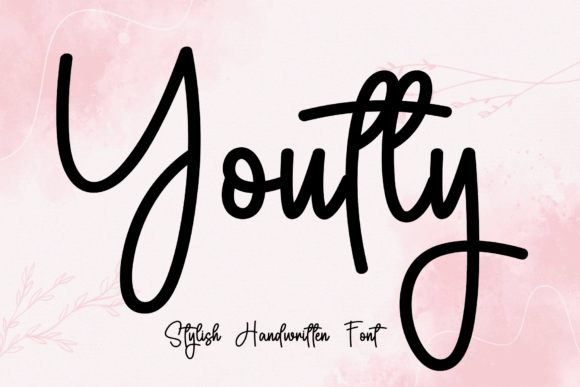
At its heart, Youtly is a cute and casual handwritten font. Its design philosophy centers on creating an "incredibly friendly feel." This isn't a font mimicking the precise strokes of a master calligrapher or the gritty texture of a marker. Instead, it aims for approachability, with soft, rounded letterforms and a slightly irregular baseline that mimics natural handwriting. The character set is typically designed to be legible at smaller sizes while retaining its charming personality, making it versatile for both digital and print contexts.
Key Reasons for Considering Youtly
Someone researching fonts like Youtly is usually seeking to solve a specific design problem or achieve a particular aesthetic. Here are common motivations:
- Brand Personality: For small businesses, solopreneurs, or personal brands, especially those in lifestyle, beauty, children's products, or artisanal goods, Youtly can visually communicate friendliness, approachability, and authenticity.
- Social Media & Digital Content: The font is frequently highlighted for use on platforms like Instagram. Its casual style can make quotes, announcements, or video thumbnails feel more personal and engaging compared to standard system fonts.
- DIY and Craft Projects: Crafters and hobbyists often use handwritten fonts for projects like greeting cards, invitations, scrapbooking, and planner stickers. Youtly's style aligns well with this hands-on, creative ethos.
- Breaking Formality: In user interfaces, presentations, or documents that risk feeling too rigid, a font like Youtly can be used strategically in headings or pull quotes to add a touch of informality and warmth.
Evaluating the Benefits and Potential Tradeoffs
Making an informed decision requires weighing Youtly's strengths against its limitations.
Benefits and Strengths
- Immediate Personality: Youtly delivers a strong, consistent tone of friendliness and casualness right out of the box. This can save significant design time compared to pairing multiple fonts to achieve a similar effect.
- Readability for its Style: Well-designed casual handwritten fonts prioritize legibility. Youtly generally maintains clarity, avoiding the overly loopy or connected scripts that can become illegible, especially in all-caps or very small sizes.
- Emotional Connection: The human, imperfect quality of handwriting can foster a stronger emotional connection with an audience than geometric, machine-perfect fonts. It feels personal.
Tradeoffs and Considerations
- Limited Formality: Its greatest strength is also its primary constraint. Youtly is not suitable for contexts requiring seriousness, authority, or traditional elegance. Using it for a legal document, a corporate annual report, or high-end luxury branding would likely undermine credibility.
- Overuse Risk: Because it is so stylistically distinct, overusing Youtly throughout a design can make it feel cluttered or childish. It works best as an accent font, paired with a more neutral, clean typeface for body text.
- Scalability Issues: While legible, extremely intricate handwritten fonts can lose detail or become messy when scaled to very large sizes for banners or billboards, or very small sizes for fine print.
When is Youtly a Strong Fit? Decision-Making Scenarios
Consider Youtly if your project aligns with these scenarios:
- You are designing for a "cottagecore" aesthetic, a children's brand, or a cozy café. The font's inherent warmth is a perfect match for these themes.
- You need a standout heading for social media graphics or a blog. It can draw the eye and set a friendly tone for the content that follows.
- You are creating a personal project like a wedding invitation, a recipe book, or a birthday card. The font adds a handmade, thoughtful quality.
- Your brand voice is explicitly casual, approachable, and youthful. Youtly can be a core part of your visual identity.
When Might an Alternative Be Worth Considering?
Conversely, you may want to explore other options in these situations:
- For long-form body text: Even the most legible handwritten font can cause eye strain over paragraphs. Pair Youtly with a simple serif or sans-serif for body copy.
- For highly technical or informational content: Clarity and precision are paramount. A clean sans-serif like Open Sans or Lato would be more effective.
- For projects requiring a vintage or rustic handwritten feel: Youtly is modern and cute. If you need something with more texture, age, or a brush-pen quality, look at fonts like "Playlist" or "Honey Script."
- When extensive language support is needed: Always check the font's character set. Some handwritten fonts have limited support for accented characters or specific languages.
Practical Steps for Evaluation
Before committing to Youtly, take these practical steps:
- Test in Context: Don't just look at the font specimen sheet. Place it in a mockup of your actual project—a social media post, a website header, a printed label. See how it interacts with your colors, images, and other typography.
- Check Licensing: Ensure the font license (free for personal use, commercial license required, etc.) matches your intended use. This is a critical, non-negotiable step.
- Pair Thoughtfully: Experiment with pairing Youtly with different neutral fonts. A common and effective strategy is to use Youtly for headings and a font like Montserrat or Roboto for body text.
- Consider the Audience: Will your target audience perceive the font as friendly and appealing, or as unprofessional? This depends entirely on your market and context.
Conclusion: Aligning Youtly with Your Goals
Youtly is not a universal solution, nor is it intended to be. It is a specialized tool designed to inject a specific, valuable quality into design work: approachable, casual friendliness. Its value lies in its ability to communicate personality instantly. The decision to use it should be based on a clear understanding of your project's goals, your audience's expectations, and the overall aesthetic you wish to create. By evaluating it against these practical criteria—rather than simply following a trend—you can make a confident choice about whether Youtly is the right font to help turn your creative idea into a true piece of art that resonates.